At Vaishno Devi, the Devi manifests as three natural rock formations called Pindis, representing the combined power of Maha Kali, Maha Lakshmi, and Maha Saraswati (the three supreme goddesses), with the central Pindi often identified as Vaishno Devi herself (a form of Mahalaxmi). Devotees worship these Pindis for power (Kali), prosperity (Lakshmi), and wisdom (Saraswati) at the holy cave of Garbh Joon in the Trikuta Mountains of Jammu & Kashmir, India.
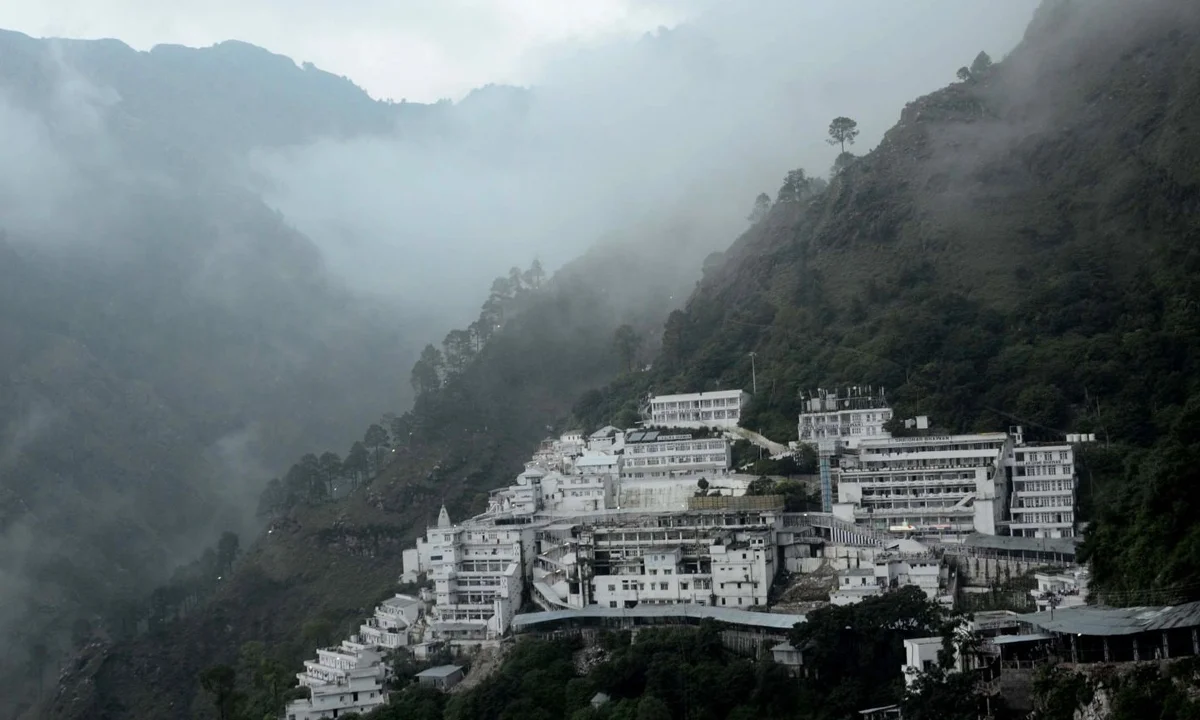
Maa Vaishno Devi Peeta
This tour is a ⭐⭐⭐⭐⭐ rated tour with 1019 guests enjoying the Shubh experience
3 Days
1 State
2 Cities
Jammu & Kashmir: Jammu ➡️ Katra
Maa VaishnoDevi Shrine
Ancient traditions believe that this Shrine is the holiest of all Shakti Peetas (a place where the Mother Goddess, the Eternal Energy has Her abode) since the skull of Mata Sati fell here.
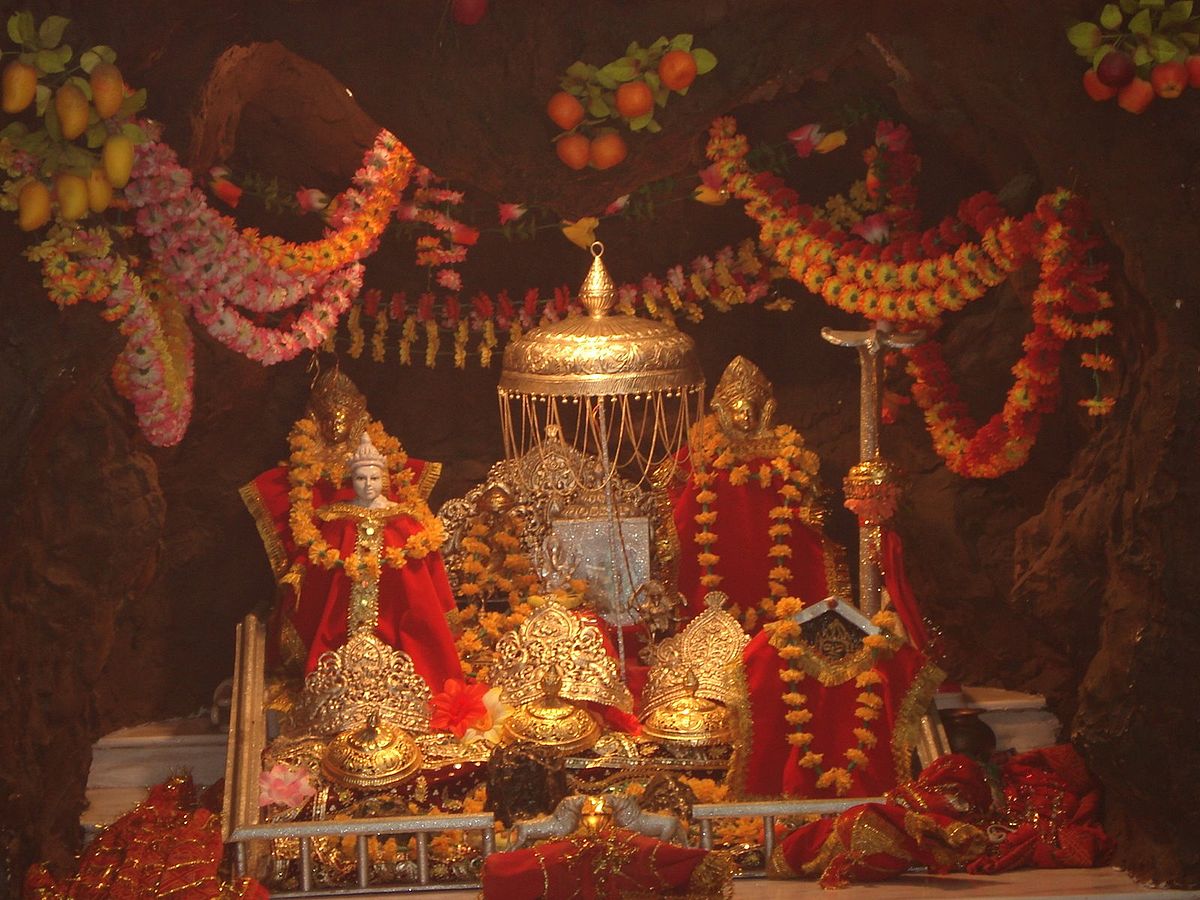
History of Maa VaishnoDevi Temple
The exact date of the origin of the temple is unknown but according to a popular version of the origin story, it is said that the Shrine of Maa Vaishno Devi was discovered by a Pandit named Shridhar.
Pandit Shridhar, being an ardent devotee of Mata Vaishnavi, felt hopeless when he learnt that Mata had suddenly left his Bhandara, a community feast that he had organised. Heartbroken, he completely isolated himself by giving up food – water and constantly prayed to Mata Vaishnavi to return. Then Maa Vaishnavi appeared in his dream. She told him to search for her shrine at a holy cave situated in Trikuta Mountains of Jammu. She insisted on breaking his fast and showed him the way to the holy cave. Pandit Shridhar left his home to search for the cave. Every time he lost his way, the vision of his dream appeared before his eyes and he reached the cave. After reaching the cave he found a rock with three heads. At that very moment, Maa Vaishno Devi appeared before him and introduced him the three heads known as Holy Pindies.
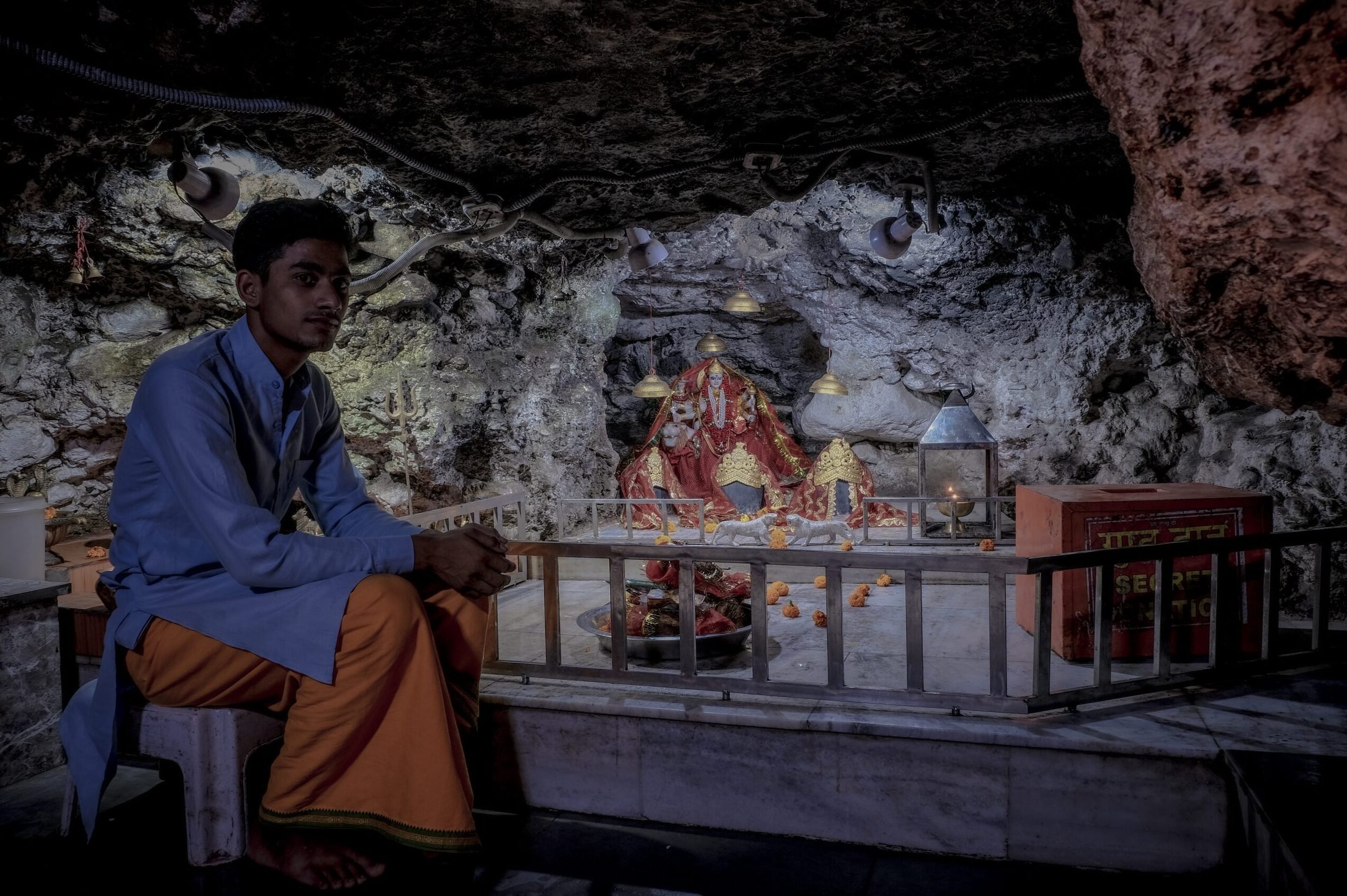
Poojas and Rituals
The Morning Aarti Mangla Aarti is around 6:00 am, before sunrise. Followed by Atma Pujan (self-purification) by priests. Abhishek is done with water, milk, ghee, honey, sugar. Dressing the deity in saree, chola, chunni is the most famous pooja. It is followed by offering Naivedyam (food). Jyoti Aarti (lamp lighting) is performed inside the cave, then brought out.
The Evening Aarti Shringar Aarti is around 7:00 pm, after sunset.
From Jammu, take private transfers to Katra, the basecamp of Shrine. From Katra, there is a yatra (trek) of 14 kms to reach the Shrine.
The trek can be achieved by any of these:
On Foot, by walk: It is the most popular and spiritual option, walking the entire distance from Katra via Banganga, Charan Paduka, and Ardhkuwari to the Bhawan i.e., main shrine.
Pony ride: Ponies are available at various points like Banganga and Ardhkuwari for those who need support on steep sections, carrying adults or luggage.
Palki ride: A traditional way where porters carry individuals in a chair-like seat called palanquin for the entire route.
Helicopter: Flying from Katra to Sanjichhat (near the temple), requiring pre-booking online.
Night stay: Katra
Relax for half day in Katra and free for shopping. Start from Katra to Jammu.
Map View

How to reach?
Jammu is accessible by all modes of transport – Flight, train, bus and car. We are happy to house your suitable means to travel. The nearest airport is Jammu and nearest train station is Jammu Railway Station.

Best time to visit
Jammu experiences Spring from March to May and Autumn from September to November. During these months, the weather is pleasant with moderate temperatures, making it comfortable for the Vaishno Devi yatra. It is suggested to avoid monsoon in July and August. Cold weather can be experienced from December to February.

Price on Request
For larger groups, the per-person cost reduces considerably. We welcome you to book our packages with family and friends.
Get in Touch
Why choose Shubh Prayan?
0%
Customer Satisfaction Rate
0
years of Trusted Service
0+
Trips Successfully Completed
Request a Callback
