According to the Shiva Purana, sages Nara and Narayana, dual incarnations of the god Vishnu, performed penance in the Himalayas. Pleased with their devotion, Shiva appeared before them. Abiding by their request to stay, so that devotees could worship him directly, manifested at Kedarnath as a Jyotirlinga.
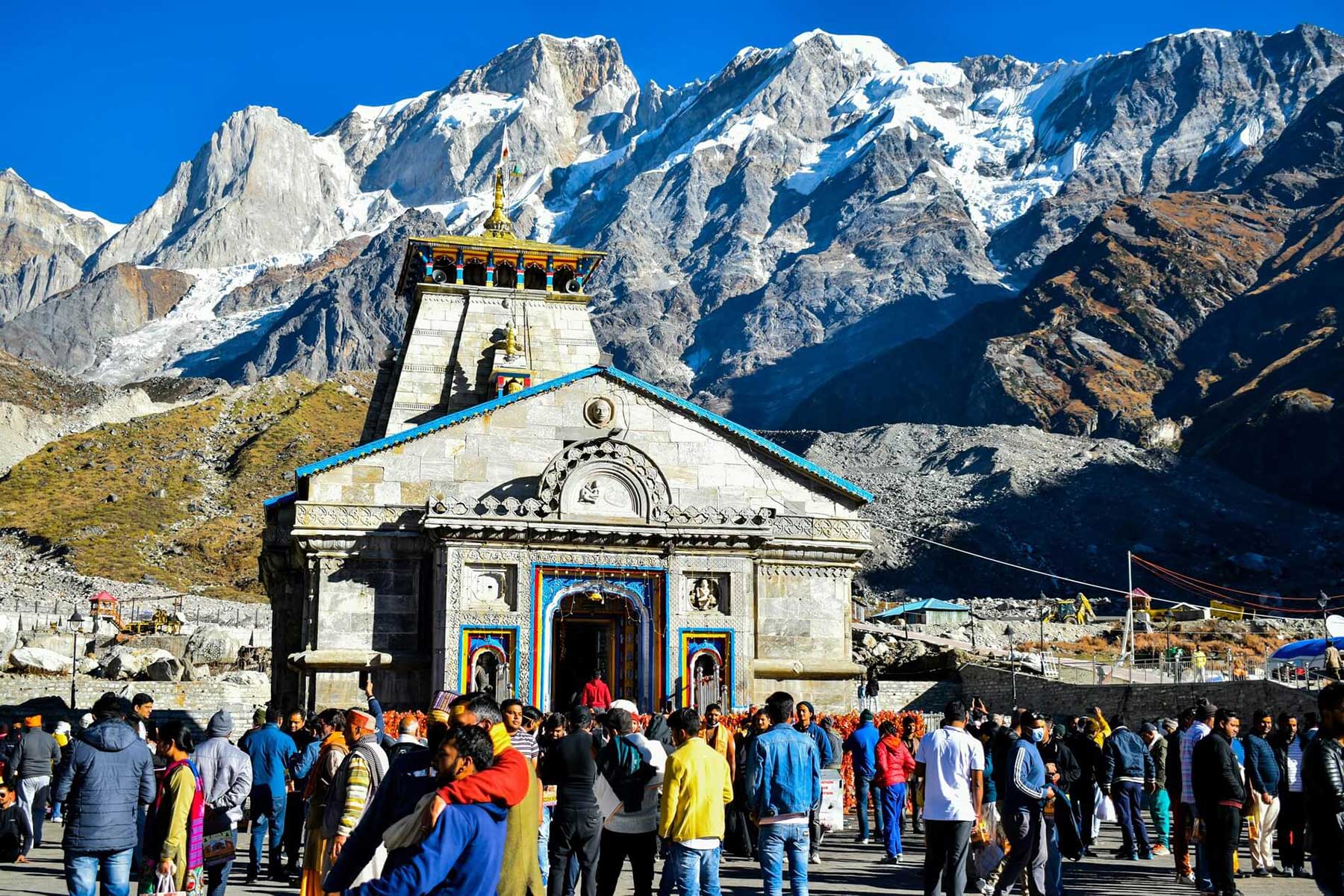
Sri Kedarnath Jyothirlinga
This tour is a ⭐⭐⭐⭐⭐ rated tour with 967 guests enjoying the Shubh experience
7 Days
1 State
9 Cities
Uttrakhand : Haridwar ➡️ Rishikesh ➡️ Sitapur ➡️ Kedarnath ➡️ Sitapur ➡️ Rudraprayag ➡️ Joshimath ➡️ Badrinath ➡️ Rudraprayag ➡️ Devprayag ➡️ Dehradun
The Origin of the Sri Kedarnath Jyothirlinga
It also said that the five Pandava princes took their final journey to Kedarnath. In the presence of Shiva and the Ganges, they performed rituals of penance and were purified before their ascent towards the heaven. The Skanda Purana refers to Kedarnath as Kedareshvara. The Himalayan site linked to the descent of the sacred Ganga, flowing from Shiva’s matted hair.
Adi Shankaracharya, the Advaita Vedanta philosopher is believed to have attained samadhi (a state of deep meditative concentration uniting with the highest reality) near the temple and is believed to have lived his final days there.
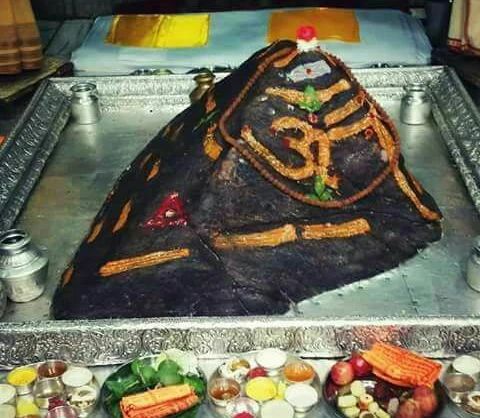
Understanding the Kedarnath Temple
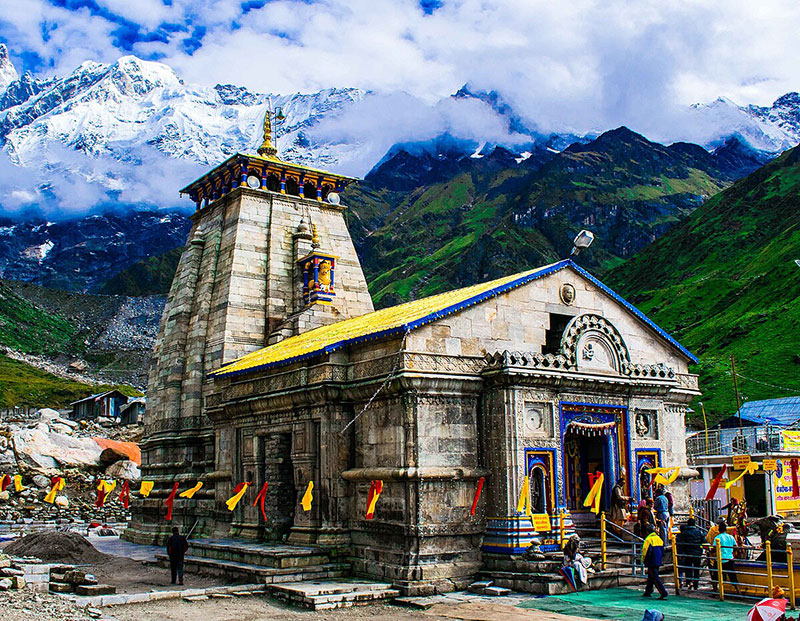
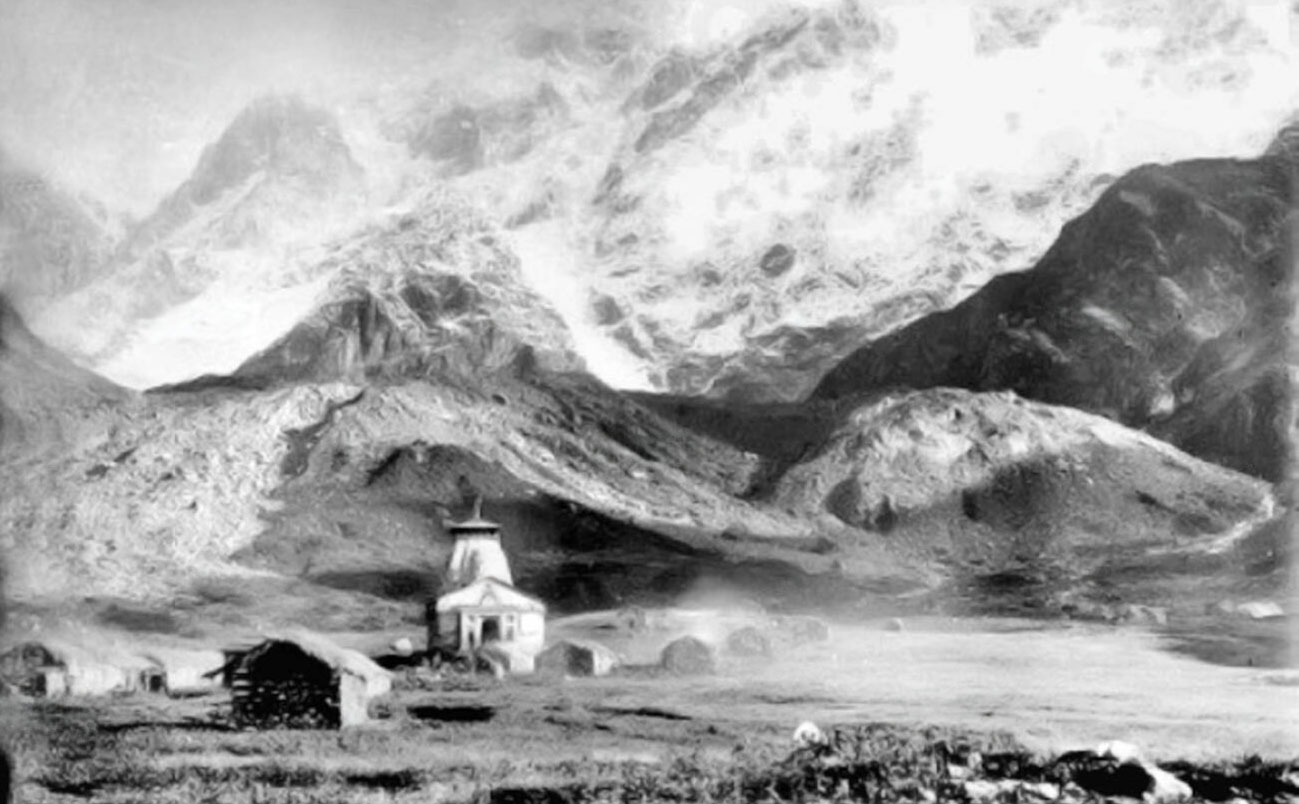
The Kedarnath temple is one of the 4 temples of the Char Dham Yatra (representing the North direction) Located in the mountain ranges of the Garhwal Himalayas in Uttarakhand state, the temple stands at an elevation of about 11,750 feet beside the Mandakini River, originating from the Chorabari Glacier. The first construction of the temple was by the Pandavas.
The temple is constructed from gray stone slabs with an interlocking design that eliminates the need for mortar. The temple is uniquely oriented north-south, unlike most Hindu temples, which face east or west. Built in the Nagara style, it features a conical shikhara (tower) rising above the central shrine, which is called a garbhagriha.
Poojas and Rituals
Each year the temple opens to visitors on the festival of Akshaya Tritiya – between April and May, and closes before the onset of winters, specifically from the occasion of Bhai Dooj, celebrated between October and November.
During winters, the Shiva murti is moved to the Omkareshwar Temple in Ukhimath, a town at a lower elevation of about 4,300 feet in Rudraprayag district, where worship continues. Among a range poojas in the morning, one can select any of these: Mahabhishek pooja, Rudrabhishek pooja, Laghurudrabhishek pooja, Shodashopachaar pooja, Ashtopachaar pooja, Panchopachaar pooja.
The Evening Poojas include: Shiv Ashtotari Path, Shiv Sehashtranaam Path, Shiv Namawali, Shiv Mahimanstrotam Path, Shiv Tandav Strotam Path, Shiv Parakshamastrotam Path, Evening Aarti.
Itinerary
A trip to Kedarnath can be combined along with places of interest nearby. Have a look to get a picture.
You could also select places of your choice and we would love to tailor the itinerary for you!
Reach Haridwar and post lunch proceed to Hari-Ki-Pauri, Mansa Devi Temple and enjoy evening Ganga Aarti.
Night stay: Haridwar.
Morning after breakfast take a drive to Rishikesh. Visit Lakshman Jhoola, Ram Jhoola, Shivanand Ashram, Yoga Training Centre, Swarga Ashram, Rameshwar Temple Geeta Bhawan. Enroute visit Rudraprayag, the Sangam of Alaknanda River & Mandakini River. Later proceed to Sitapur.
Night stay: Sitapur
Start very early to Gauri Kund. On arrival start the trek for Kedarnath temple approx.16 km journey – either by helicopter or walk or by horse or by Doli. After the darshan, relax at Kedarnath. Take note that the stay at Kedarnath are basic.
Start early to trek back to Gauri Kund then return to Sitapur hotel. Post lunch, drive to Rudraprayag en-route visit Karnaprayag, Sangam of Alakananda River & Pindar River & Nandprayag, Panch Prayag of Alakananda River.
Night stay: Rudraprayag.
Take a drive to Badrinath en-route visit Joshimath to visit Narasimha Swamy Temple & Shankaracharya temple and also Vishnuprayag. Upon arrival in Badrinath, visit Mana Village, the last Village before the Tibetan border, Vyas Cave, Sarswati River and Bheem Pul. At the evening, take darshan of Sri Badrinath Ji.
Night stay: Badrinath
In the morning visit the Badrinath Temple to perform any rituals, and post lunch proceed to Rudraprayag
Night stay: Rudraprayag
Morning proceed to Dehradun, enroute visit Devprayag, Sangam of Alakananda River & Bhagirathi River. From Dehradun, take a flight or train to hometown.
Map View
How to reach?
Dehradun is the nearest Airport to Kedarnath. The nearest railway station to Gaurikund is Rishikesh. Taxis and buses are available from Rishikesh, Srinagar, Rudraprayag, Tehri and many other destinations to Gaurikund. The journey to Kedarnath requires a 16-km trek from Gaurikund, the last motorable point. People may ride ponies, mules, or horses to reach the temple. Helicopter services operate from Phata, Guptkashi, and Sitapur in Rudraprayag district (subjected to weather conditions). We highly recommend to have a check on health conditions before the travel.

Best time to visit
April, May and June are the most favourable months for a visit because of milder weather.
The recommended months to visit are August, September and October.
The temple remains closed during winter because of heavy snowfall – November to March.
The recommended months to visit are August, September and October.
The temple remains closed during winter because of heavy snowfall – November to March.

Price on Request
For larger groups, the per-person cost reduces considerably. We welcome you to book our packages with family and friends.
Get in Touch
Why choose Shubh Prayan?
0%
Customer Satisfaction Rate
0
years of Trusted Service
0+
Trips Successfully Completed
Request a Callback
